


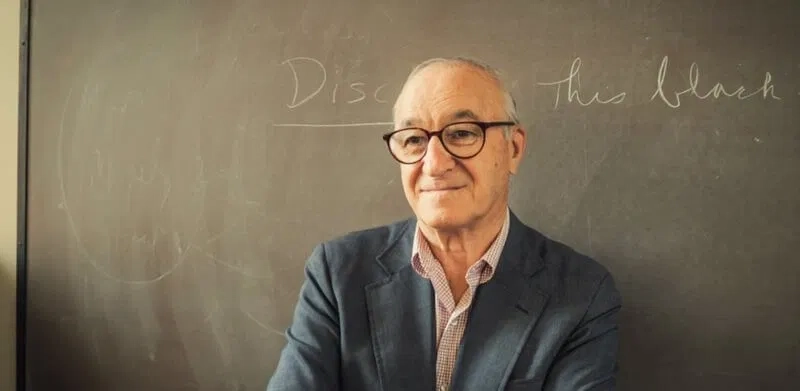
Core Biographical Snapshot
- Birth/Death: Born in 1925 in Mundare, Alberta, Canada; died in 2021.
- Key Field: The undeniable leader of the Social Learning Theory (later Social Cognitive Theory), bridging Behaviorism and Cognitive Psychology.
- Education: Earned his Ph.D. from the University of Iowa; spent nearly his entire career teaching at Stanford University.
- Defining Context: His work fundamentally challenged radical Behaviorism by proving that learning can occur without direct reinforcement simply by observing others.
- Core Concepts: Famous for the Bobo Doll Experiment, Observational Learning (Modeling), Reciprocal Determinism, and Self-Efficacy.
The Birth of Social Cognitive Theory: Albert Bandura’s Defining Sub-Discipline
Albert Bandura didn’t just create a sub-discipline; he forged a total bridge between the two massive, totally opposed camps of 20th-century psychology: Behaviorism and Cognitivism. His initial work was called Social Learning Theory, which he later refined into Social Cognitive Theory (SCT). This field is the quintessential “Fourth Force” in psychology, recognizing that humans are not just driven by internal forces (Freud) or external consequences (Skinner).
SCT argues that most human learning is social and observational. We watch other people, figure out the rules, and then decide what to do.
- Core Premise: People are active agents, not just passive reactors. We interpret, we judge, and we think about what we see.
- Goal: To understand how cognitive processes (like expectations and intentions) interact with the social environment and behavior to determine outcomes.
- Key Addition: Bandura brought cognition (thoughts, beliefs, expectations) back into the learning equation, which the radical Behaviorists had totally thrown out. This was truly revolutionary.
Landmark Theories: Albert Bandura’s Conceptual Breakthroughs
Albert Bandura’s massive influence comes from his highly robust, scientifically testable concepts, which truly proved that inner thoughts matter just as much as external rewards.
| Core Concept/Theory | Description and Impact | Real-World Application Example |
| Observational Learning (Modeling) | The totally powerful process of learning new behaviors or modifying old ones simply by observing others (models) and the consequences they receive. | A child sees their parent handle a difficult situation calmly; the child learns the calming technique without ever being directly rewarded for it. |
| Reciprocal Determinism | The crucial, three-way interaction where Behavior, Cognitive Factors (thoughts/beliefs), and Environmental Events all totally influence each other, continuously. | A teenager’s belief they are uncool (cognitive) leads them to avoid social situations (behavior), which makes their peers ignore them (environment), confirming the original belief. It’s a loop. |
| Self-Efficacy | The totally central belief in one’s own capacity to organize and execute the courses of action required to manage prospective situations. It’s not self-esteem, it’s confidence in a specific task. | A student who knows they are smart (high self-esteem) might still have low Self-Efficacy about public speaking (a specific task). This belief is the single best predictor of success. |
| The Bobo Doll Experiment | Bandura’s most famous research where children observed an adult aggressively hitting a large doll. Children who saw this model were significantly more likely to repeat the aggressive acts spontaneously. | It definitively proved that aggressive behavior could be learned through observation alone, totally challenging Skinner’s view that all learning required direct reinforcement. |
Early Life, Family Context, and Environment: What Shaped Albert Bandura
Albert Bandura’s upbringing in a small, totally isolated Canadian town actually fostered the independence and self-directed learning that would later define his theories. He was born in Mundare, a tiny village in Alberta with only about 400 residents. His parents, an economic necessity, totally valued education and encouraged him to be curious and totally self-directed; they weren’t overly academic themselves. Because the tiny high school he attended offered very limited coursework, he had to take total responsibility for his own learning, teaching himself many subjects. This early experience that learning is often self-directed, observational, and based on internal motivation was the ultimate, profound inspiration for his later focus on the concepts of Self-Regulation and Self-Efficacy. The environmental limitations of his youth forced him to become the kind of self-agent he later described in his scientific work, which is a truly perfect example of his own theory in action.
Practical Frameworks: Immediate Personal Insight from Albert Bandura
You can use Bandura’s clear, powerful concepts to immediately break totally stubborn habits and build real, lasting confidence.
- Stop Trying to Just “Will” Change (Reciprocal Determinism): If you are trying to change a behavior (e.g., stop eating junk food), you need to change all three factors: Environment (remove the junk food from the house), Cognitive Beliefs (challenge the thought, “I can’t resist this”), and the Behavior (actually using a new coping strategy). Changing only one is usually totally ineffective. You need the whole system.
- Use Enactive and Vicarious Mastery (Building Self-Efficacy): The only way to truly build Self-Efficacy (task-specific confidence) is through two key methods. First: Enactive Mastery deliberately succeeding at small, incremental steps toward a goal (the real experience of success). Second: Vicarious Experience watching someone similar to you totally succeed at the task you fear. Seeing someone else do it makes you believe you can do it. Actively seek out both types of mastery experiences.
- Find the Best Models: Realize that you are constantly learning from the people you are totally surrounded by. If you want to be calm, successful, or totally focused, stop hanging out with people who are constantly panicking or procrastinating. Choose your models wisely. Identify people who embody the behaviors you want to acquire and observe them actively how do they speak? How do they organize? You are learning, even when you aren’t trying to.
Why the Modern Student Still Needs Albert Bandura’s Insight
Bandura’s work is absolutely fundamental because it provides the theoretical structure for understanding learning in the massive age of visual media and social influence.
- Understanding Media Impact: Bandura’s theory is the ultimate tool for analyzing the impact of media, video games, and social networks on behavior. His model explains exactly how exposure to violence, consumerism, or unrealistic body images leads to modeling and behavioral shifts, making his work essential for media studies and public health.
- Clinical Applications: His concept of Self-Efficacy is the single most important factor targeted in CBT and behavior modification programs for things like phobias, health promotion, and addiction recovery. Students in any clinical field absolutely must understand how to assess and build client Self-Efficacy.
- The Agentic Self: Bandura’s emphasis on humans as self-regulating, proactive agents gave psychology a powerful, optimistic view of human potential. It teaches the student that they have the cognitive tools to totally control their own future and make choices, rather than being passively driven by outside forces.
Essential Texts for Deepening Albert Bandura’s Study
Bandura’s writing is rigorous, highly detailed, and exceptionally clear in its presentation of complex, systematic thought.
- Social Learning Theory (1977): The highly foundational text where he first systematically laid out the role of modeling, vicarious reinforcement, and the crucial distinction between learning and performance. This is the absolute starting point.
- Social Foundations of Thought and Action: A Social Cognitive Theory (1986): His massive, truly comprehensive work that totally renames and refines his model, integrating his later concepts like Reciprocal Determinism and elaborating the pivotal role of Self-Efficacy. This is the definitive statement of his total theory.
- Self-Efficacy: The Exercise of Control (1997): A book entirely dedicated to his most powerful concept, detailing the sources, effects, and applications of Self-Efficacy across health, education, business, and totally all aspects of human life.
Concluding Thoughts
Albert Bandura stands as a colossal, bridging figure who fundamentally ended the restrictive era of pure Behaviorism, insisting that psychology must include the truly powerful, necessary role of internal thought, interpretation, and self-belief. His Social Cognitive Theory provided the essential, scientifically proven mechanism Observational Learning for understanding how culture, media, and social networks totally shape behavior. His greatest legacy, however, is the concept of Self-Efficacy: the empowering, highly optimistic message that our belief in our own capacity to succeed is not just a side effect of achievement, but the causal force that determines our actions, our perseverance, and, ultimately, the total trajectory of our lives. He taught us that belief is action.