


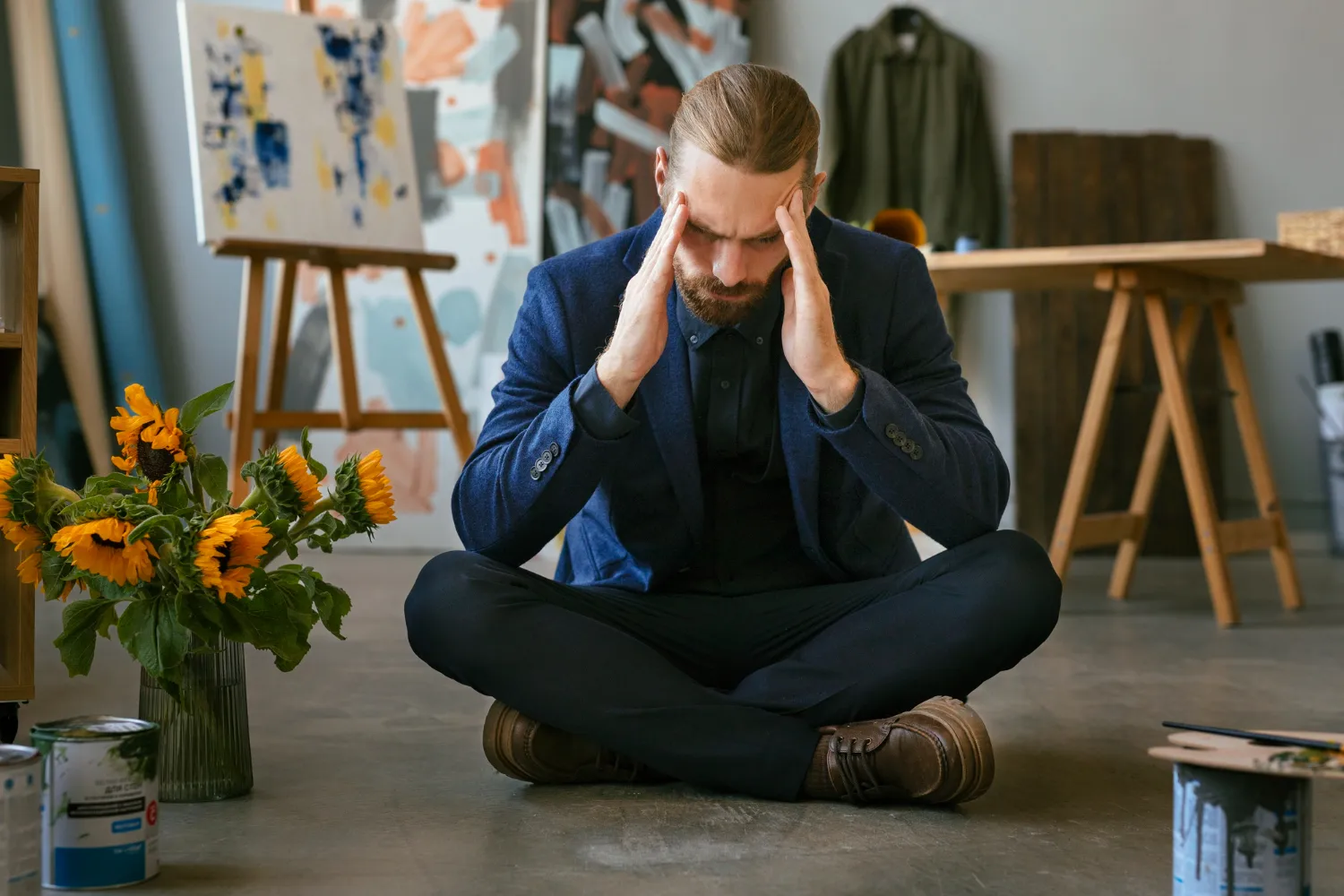
Your heart starts pounding right before a big presentation. Your hands shake when you think about an upcoming social event or an awkward conversation. You wonder how to deal with anxiety when it feels like your own nervous system has declared war on your body.
Millions of people wake up every single morning carrying this exact same heavy burden. You search desperately for what helps with anxiety because the constant worry drains all your physical energy. Understanding the root cause of your panic provides the first necessary step toward finding real relief.
This comprehensive guide offers practical methods for dealing with anxiety in any situation. We will explore immediate grounding exercises and long-term psychological frameworks. You will learn the exact coping mechanisms for anxiety that professionals teach their patients every day.
Understanding What Your Nervous System Is Doing
You must understand the biological mechanics of fear before you can fix them. When you ask what to do when feeling anxious, doctors point to your fight-or-flight response. Your brain detects a threat and floods your body with adrenaline to prepare for survival.
Anxiety happens when your brain detects terrible danger in completely safe situations. You sit safely in your living room, but your mind reacts as if a predator just broke down the door. Learning how to cope with anxiety means teaching your brain the difference between a real physical threat and a stressful thought.
The pioneering work of Sigmund Freud suggested that adult anxiety often masks deep unconscious conflicts. While modern psychology relies less on pure psychoanalysis, the basic concept remains incredibly useful. You cannot find the best way to deal with anxiety until you figure out what you are actually running from.
How To Reduce Anxiety Immediately During A Panic Attack
Sometimes you cannot wait for a therapy appointment to feel better. You need to know how to get rid of anxiety fast when a full panic attack strikes at work or in public. Your primary goal involves shutting down the adrenaline spike as quickly as possible.
Grounding techniques offer the best immediate anxiety help during a severe crisis. You must force your brain to focus on the current physical environment instead of the terrifying thoughts. Look around the room and name five things you can see, four things you can touch, and three things you can hear.
Breathing exercises also provide massive help with anxiety when your chest feels tight. Inhale slowly through your nose for four seconds, hold the breath for four seconds, and exhale completely for six seconds. This specific rhythm physically forces your heart rate to slow down.
Top Tips For Dealing With Anxiety Daily
You need a proactive routine to keep your baseline stress levels manageable. If you wait until you feel panicked to use your anxiety coping strategies, you have already lost the battle. Prevention requires daily dedication to your mental hygiene.
Physical exercise represents one of the most effective ways to manage anxiety naturally. A brisk walk or a heavy lifting session burns off the excess adrenaline flooding your system. You cannot hold extreme physical tension in a body that just exhausted itself at the gym.
You must also monitor your caffeine intake relentlessly. People often search for things to help anxiety while drinking three cups of strong coffee every morning. Caffeine mimics the physical symptoms of a panic attack and constantly triggers your nervous system into overdrive.
Cognitive Coping Strategies For Anxiety
Your thoughts dictate your physical emotional responses completely. You can learn how to work through anxiety by challenging the dark stories your brain tells you. This requires constant vigilance over your internal monologue.
The cognitive framework created by Aaron Beck teaches us to identify logical fallacies in our thinking. When you catastrophize a situation, you assume the absolute worst outcome will definitely happen. You must demand actual evidence from your brain before you believe these terrifying predictions.
Finding strategies for anxiety means replacing these catastrophic thoughts with realistic alternatives. You do not have to think purely positive thoughts, you just have to think accurate ones. Accurate thinking represents one of the strongest anxiety coping mechanisms you can ever develop.
Exploring Different Anxiety Management Techniques
You will never find a single magic trick that cures everything instantly. You must build a diverse toolkit of anxiety management techniques to handle different types of stress. What works for public speaking might fail completely during a family argument.
Journaling provides an excellent outlet for overwhelming internal noise. Write down every single fear racing through your head without judging yourself. Seeing the fears on paper often reveals how irrational they actually are.
Mindfulness meditation offers another powerful path forward. If you wonder how to fight anxiety without fighting your own mind, mindfulness provides the answer. You simply watch your anxious thoughts float past your consciousness without reacting to them emotionally.
How To Stop Being Anxious About Social Situations
Social panic isolates you from the world and destroys your potential support systems. You wonder how to get over anxiety when simply talking to a cashier makes you sweat. This specific fear usually stems from a deep fear of judgment and rejection.
Building your emotional intelligence significantly reduces your social dread. When you understand how to read other people accurately, you stop assuming everyone hates you. High EQ allows you to navigate conversations with quiet confidence instead of desperate fear.
The social learning theories of Albert Bandura show that we build confidence through successful observation. Watch how calm people handle awkward silences or minor social mistakes. You can learn how to combat anxiety simply by modeling the behavior of people who feel secure in crowds.
Recognizing Relationship Anxiety And Toxic Bonds
Your environment triggers your panic far more often than you realize. You might search for ways to calm anxiety when your body is actually just warning you about a dangerous person. You cannot meditate your way out of an actively abusive relationship.
If you suspect your partner is manipulative, read our guide explaining what is a narcissist carefully. A toxic partner uses your insecurities against you to maintain absolute control. They purposefully trigger your nervous system to keep you off balance and dependent on them.
This dynamic frequently escalates into a dangerous situation. Our comprehensive article defining what is a trauma bond details how this abuse destroys your mental health. Breaking these toxic connections is the only reliable way to eliminate the crushing daily dread they cause.
How Attachment Patterns Drive Your Panic
Your early childhood experiences built the foundation for how you handle stress today. If you want to know what is good for anxiety, you must examine how your parents comforted you. Those early interactions wired your brain for either security or chronic worry.
Review our deep dive on attachment styles in relationships to understand your personal triggers. An anxiously attached person panics whenever their partner asks for simple space. They view normal boundaries as an immediate threat of abandonment.
Healing requires you to recognize these outdated childhood survival skills. You must learn how to self-soothe instead of demanding constant reassurance from your partner. Taking responsibility for your own emotional regulation builds immense personal confidence over time.
Neurodiversity And The Overwhelmed Brain
Standard psychological advice often fails completely for individuals with different cognitive structures. You might try all the standard tips for managing anxiety and still feel terrible. Your brain might simply process sensory input differently than the average person.
We strongly suggest reading our guide on what is neurodivergent if you experience intense sensory panic. Loud noises, bright lights, or complex textures can trigger a physical fight-or-flight response in an autistic individual. This is not a psychological phobia, it is a neurological reality.
For neurodivergent individuals, the best ways to help anxiety involve environmental control. You must advocate for your sensory needs at work and at home. Wearing noise-canceling headphones often provides more relief than years of traditional talk therapy.
How To Help Someone With Anxiety Effectively
Watching someone you love suffer through a panic attack makes you feel completely helpless. You ask doctors how to help someone with anxiety without making the situation worse. Your primary job is to remain the calmest person in the room.
Never tell a panicking person to just calm down or stop overthinking. This invalidates their experience and usually escalates their fear instantly. You must validate their emotions while gently grounding them in present reality.
If you want to know ways to help anxiety in others, ask them what they need. Sometimes they need a tight hug, and sometimes they need you to stand far away. Respect their physical boundaries completely during an episode.
Utilizing Behavioral Conditioning For Relief
You trained your brain to fear certain situations, which means you can train it to feel safe again. The behavioral psychology principles developed by B.F. Skinner provide a roadmap for recovery. You must expose yourself to your fears gradually.
If you want to know how to overcome anxiety regarding driving, you do not immediately hop on a busy highway. You sit in a parked car until the panic subsides. The next day, you drive down the driveway.
This gradual exposure rewires your neural pathways completely. It represents one of the most reliable coping techniques for anxiety ever documented. You teach your body that you can survive the discomfort without dying.
Healing Family Systems And Generational Stress
Your family dynamic dictates your baseline stress levels entirely. The structural family therapy framework from Salvador Minuchin explains how anxiety spreads like a virus through a household. If the parents constantly panic over money, the children learn to view the world as an inherently scarce and dangerous place.
You can trace your chronic worry back through several generations. Murray Bowen mapped how families pass down unhealed emotional trauma. You might be carrying the unresolved survival panic of your grandparents in your current nervous system.
Breaking this cycle requires incredible self-awareness. You must differentiate yourself from your family’s emotional chaos. You have to decide that their chaotic reaction to life does not have to be your reaction.
The Power Of Authentic Communication
Hiding your true feelings requires a massive amount of physical energy. The communication theories of Virginia Satir show how keeping secrets destroys your physical health. When you constantly pretend you are fine, your internal pressure builds until you eventually break.
Finding out what can help with anxiety often involves simple honesty. Tell your friends that you feel overwhelmed. Tell your boss that a specific deadline seems unrealistic.
You will find that people generally react with compassion when you drop the fake mask. Authentic expression relieves the crushing weight of maintaining a perfect image. It is one of the most liberating things to help with anxiety you will ever try.
When To Consider Professional Medical Intervention
Sometimes all the breathing exercises in the world cannot fix a severe chemical imbalance. You try every single trick to discover how to ease anxiety, but the physical symptoms persist. This simply means your hardware needs professional support.
You should consult our comprehensive guide covering anxiety medication to understand your options. Psychiatric drugs provide a sturdy bridge over a terrifying emotional canyon. They stop the physical symptoms so you can actually focus on healing your mind.
There is absolutely no shame in utilizing modern medicine. You would never tell a diabetic to just breathe through a lack of insulin. You must give your brain the exact chemical support it needs to function correctly.
Answering Desperate Search Queries
People type frantic questions into search engines at three in the morning when they cannot sleep. We see endless variations of what helps anxiety or ways to overcome anxiety on our servers. The spelling mistakes show exactly how much pain these individuals are experiencing.
You might search for how to deal.with anxiety or techniques to help with anxiety while crying in a bathroom stall. You might type ways to cope with anxiety or what to do for anxiety hoping for an instant miracle. We designed this guide to answer all those desperate cries for help.
When you ask how to beat anxiety, remember that it is not an enemy you kill. It is an internal alarm system you must learn to regulate. Finding out how to help anxiety means making peace with your own mind.
Building A Life Beyond The Fear
Recovery does not mean you will never feel nervous again. Even the most secure individuals experience stress before major life events. True recovery means the fear no longer stops you from living your life.
The developmental stages outlined by Erik Erikson show that we must master certain challenges to grow. Overcoming your panic allows you to build genuine intimacy and contribute to society. You stop hiding from the world and start participating in it.
Embrace the humanistic approach taught by Carl Rogers and give yourself unconditional positive regard. Stop hating yourself for being afraid. Self-compassion heals a shattered nervous system faster than harsh criticism ever will.
Key Takeaway
Managing a hyperactive nervous system requires a combination of immediate grounding techniques, long-term cognitive restructuring, and deep self-compassion. You must actively challenge your terrifying thoughts while implementing daily physical routines to burn off excess stress hormones. By building a diverse toolkit of psychological strategies, you can regain control of your life and stop letting panic dictate your future.
Author John Doe John is a clinical psychology researcher and senior content strategist at Famous Psychologists. He specializes in providing actionable coping mechanisms for severe stress and breaking down complex psychological phenomena for everyday readers.
Take the next step toward a calmer mind today. Explore our extensive directory of pioneering psychologists to learn more about the scientific foundations of mental resilience and emotional healing.